- Home
- Research Projects
- Restoring wetlands in Iceland: impacts on greenhouse gas balance and ecosystem function
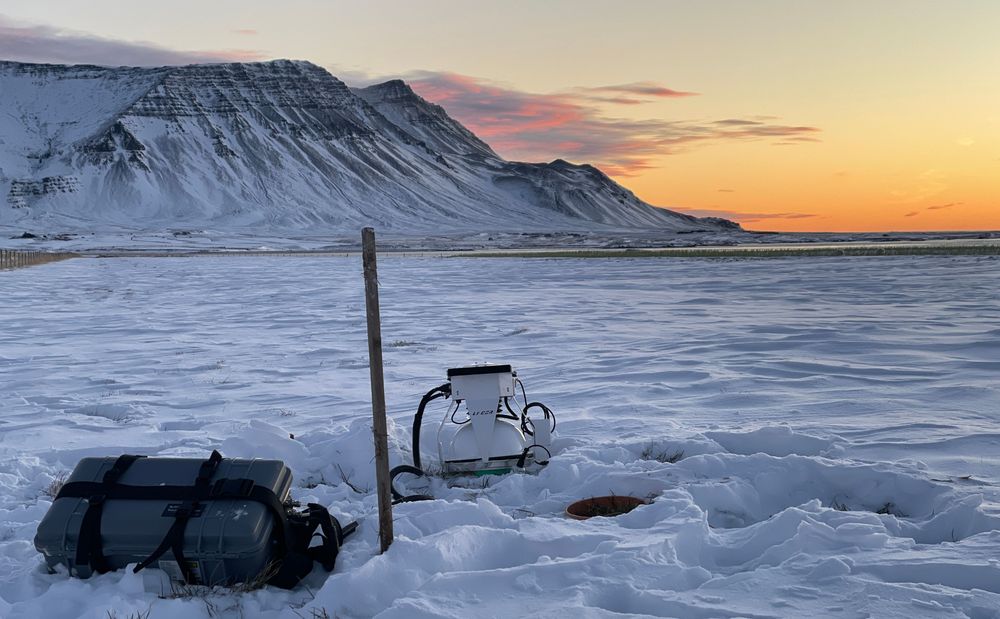
Peatlands are among the most important carbon stores on Earth, locking away vast amounts of carbon under waterlogged conditions that slow decomposition. Yet, their drainage contributes disproportionally to greenhouse gas (GHG) emissions. Rewetting has therefore become a key restoration strategy widely to recover peatland function and reduce carbon losses.
In project ReWet, we investigate peatland restoration across multiple levels. We examine how land use and rewetting affects hydrological conditions, GHG (CO₂, CH₄ and N₂O) emissions, and microbial processes and how those compare to a nearby undisturbed natural peatland. We quantify the annual carbon balance of a drained and recently rewetted site using eddy covariance and assessing carbon losses via water pathways. Additionally, we monitor vegetation succession, and the insect and bird diversity recovery following rewetting. Finally, we further upscale GHG emissions to the site scale with drone-based remote sensing and spatial modelling to capture site spatial variability.
Through these integrated approaches, we aim to provide a comprehensive understanding of peatland ecosystem recovery and its relevance for climate mitigation.
Contacts