Lífræn jarðvegsskán (lífskurn) er samfélag ólíkra lífvera á yfirborði og í efstu mm jarðvegs, sem getur
gegnt mikilvægu hlutverki við endurheimt raskaðra vistkerfa. Lífskurn sem myndast eftir áburðargjöf við uppgræðslu raskaðs lands eykur stöðugleika jarðvegsyfirborðisins og stuðlar að landnámi margra innlendra plöntutegunda á landgræðslusvæðum, þar á meðal birkis og víðitegunda. Inngrip sem stuðla að myndun lífskurnar hafa því mikla þýðingu fyrir endurheimt birkiskóga og annarra þurrlendisvistkerfa. Hins vegar er ekki vitað hvaða gerðir lífskurnar myndast eða er mögulegt að mynda með inngripum við þær aðstæður, hvaða aðferðir eru árangursríkastar við það og hvaða eiginleikar lífskurnarinnar skipta mestu við endurheimt vistkerfa.
Munum við: (1) gera kerfisbundna leit og greiningu á heimildum um notkun tilbúnnar lífskurnar við
endurheimt vistkerfa í köldu umhverfi (vinnupakki 1, WP1); (2) lýsa ítarlega tilbúinni lífskurn á þremur mismunandi svæðum með DNA greininga (WPs 2 og 3); og (3) byggja upp getu hjá LbhÍ og
samstarfsaðilum til að útbúa og meta þróun lífskurnar við endurheimt vistkerfa, bæði á smáum skala við stýrðar aðstæður og á landgræðslusvæðum (WP4 og WP5).
What ISbiocrust?
„Biological soil crusts (biocrusts) result from an intimate association between soil particles and differing proportions of photoautotrophic (e.g. cyanobacteria, algae, lichens, bryophytes) and heterotrophic (e.g. bacteria, fungi, archaea) organisms, which live within, or immediately on top of, the uppermost millimetres of soil. Soil particles are aggregated through the presence and activity of these often extremotolerant biota that desiccate regularly, and the resultant living crust covers the surface of the ground as a coherent layer.“
In Iceland, biocrust covers large areas1 and can respond to environmental change, with consequences for the functioning of ecosystems2,3,4. Also, it often acts as safe site for the establishment of seedlings5,6,7, which suggests that promoting biocrust development (e.g., via innoculation8) could be a nature-based solution for the restoration of degraded ecosystems.
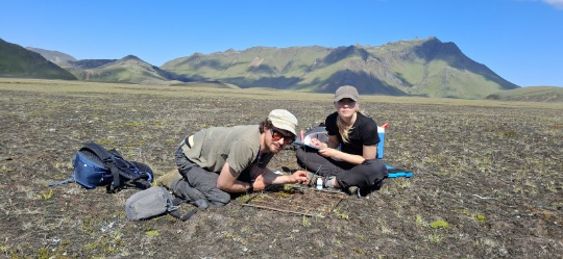
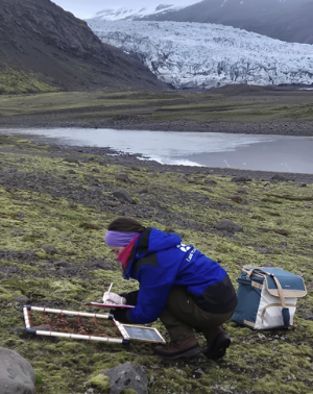
At the Agricultural University of Iceland, we are doing a nation-wide characterization of biocrust microbial communities, and their potential functionality; studying biocrust responses to environmental change; and developing methodologies for mapping biocrusts with remote sensing and for using biocrust material for the restoration of degraded ecosystems.
ISbiocrust is the research team that is possible thanks to collaborations with local and international partners and to funding from Rannís, project 2612293-051; and Orkurannsóknasjóður, project 5445.
Tengiliðir
Naomi Bos
PhD student at the Agricultural University of Iceland, and Forestry consultant at Land and Forest Iceland.
nem.ndb1@lbhi.is
Leon Brandl
MSc thesis project: eDNA-based Characterization of Fungi in Icelandic Biocrusts: Diversity, Ecological Functions & Implications for Ecological Restoration.
nem.leb3@lbhi.is
Kristín Savarsdóttir
Adjunct Professor at Agricultural University of Iceland
kristin.svavarsdottir@land.is